




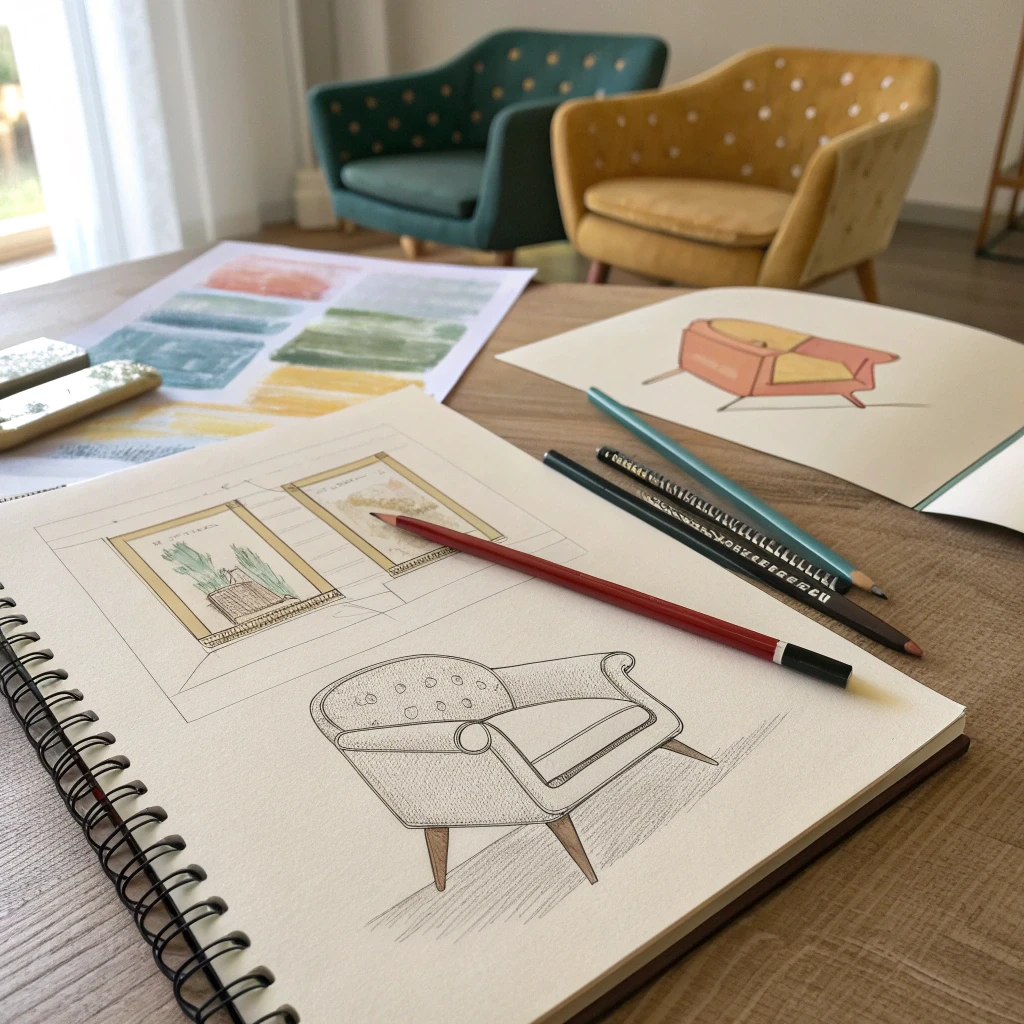
Furniture Sketching
Description
Unlock the essentials of furniture sketching in this beginner-oriented mini-course, structured across 10 detailed PDF modules that deliver focused textual instructions to guide you from basic concepts to practical application over 3–5 hours. No drawing background required; the content assumes you’re starting fresh and emphasizes building skills through clear, step-by-step written explanations that encourage steady experimentation and confidence.
You’ll begin by setting up a simple workspace and exploring foundational techniques, like holding a pencil comfortably and making your first loose lines to capture the essence of everyday objects without overthinking perfection. Affordable materials such as basic pencils, sketch paper, and a reliable eraser come into play early, allowing you to focus on affordability while experimenting with strokes that convey form and proportion in chairs or tables.
As progress builds, grasp how everyday shapes—circles for seats, rectangles for tabletops—combine to form balanced structures, avoiding the pitfalls of uneven proportions that can make sketches feel off-kilter. Perspective adds realism next, with guidance on one- and two-point methods to depict how furniture interacts with space, turning flat drawings into scenes that suggest depth and placement in a room.
Move toward variety by outlining different pieces, from straightforward stools and benches to more involved cabinets and shelves, incorporating beginner tips to sidestep errors like disproportionate limbs or awkward angles. Shading techniques bring dimension, teaching you to layer tones for realistic rendering that highlights curves and edges, while texture details—such as wood grains or fabric folds—emerge through descriptive approaches that simulate materials on paper.
Refine your approach by experimenting with stroke styles, whether bold and decisive for modern pieces or softer for vintage vibes, helping you carve out a signature way of seeing and depicting forms. Real-life exercises wrap things up, like reimagining a familiar living area or drafting bespoke items for hypothetical clients, followed by organizing standout pieces into a portfolio that tracks your evolution—valuable for personal enjoyment or stepping into design fields.
Throughout these 10 PDFs, the written content prioritizes actionable insights over theory, fostering a thoughtful progression that suits hobbyists or career explorers alike, all centered on textual depth to support self-directed growth in creative visualization.

 3
Products
3
Products
-
Category:Graphic Design
-
Rating:
-
Product Type:Mini-course
-
Level:Beginner
-
Duration:Medium (3–5 hours)

Share Your Experience
& Help Others Grow
Did this course help you on your creative journey? Your feedback is invaluable. It helps the instructor improve and guides future students in our community of creators.
You must be logged in to post a review.
Log inTips, Tricks, and Inspiration
Dive deeper into the world of creativity with fresh ideas and expert advice from our blog.
How to Stay Motivated During Long Courses
Delayed Development: How to Change Your Mindset
Creating a Personal Learning Space