




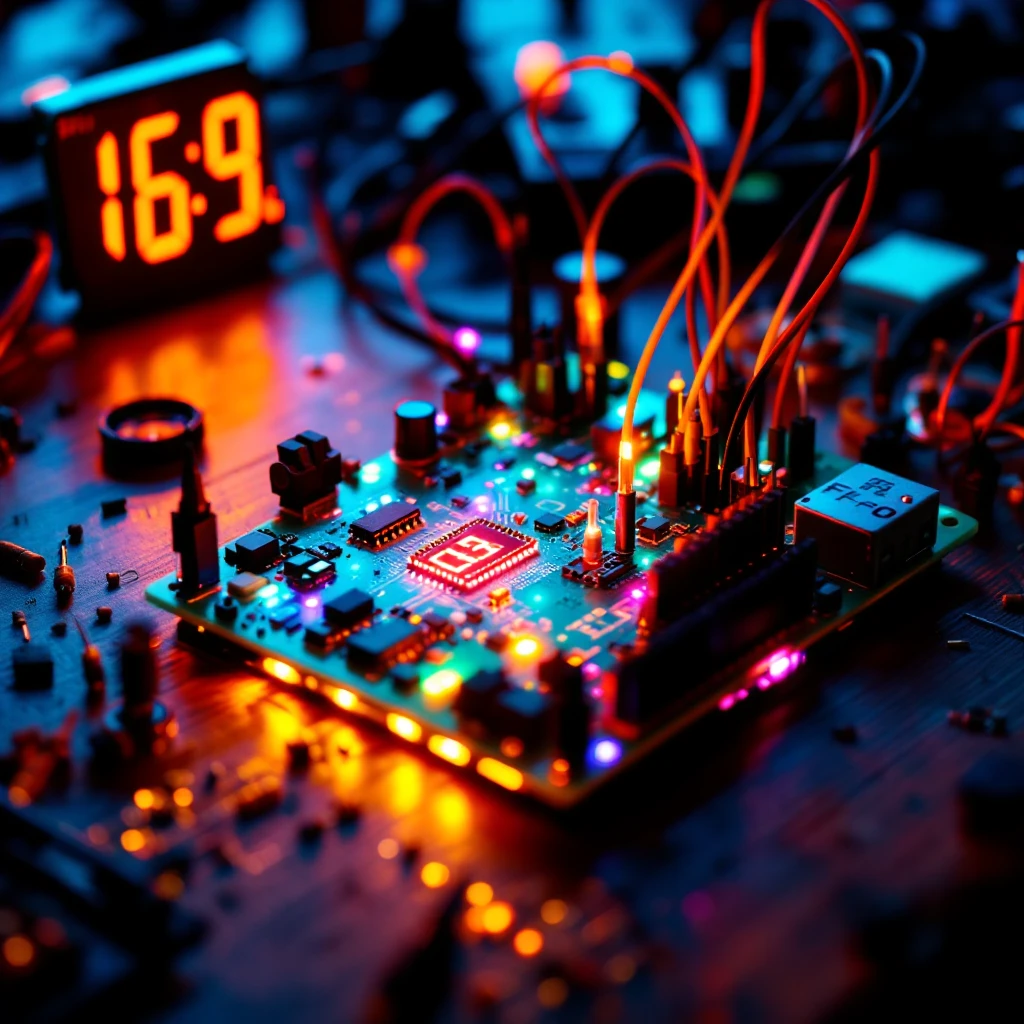
FPGA Introduction for Hobbyists
Description
Explore the fascinating realm of programmable hardware through this dedicated FPGA course, crafted for hobbyists and those new to the field. From no prior experience, this program leads you step by step into designing adaptable digital circuits capable of executing a wide array of tasks, all reconfigurable as your projects evolve.
Delivered via 14 in-depth PDF modules rich in instructional text, the content spans foundational principles to hands-on implementation. It opens with an overview of FPGA technology and its distinctions from conventional microcontrollers, followed by core digital design elements. Practical instruction introduces Verilog and VHDL via executable examples tailored for actual hardware setups.
Hands-on exercises encourage building and verifying circuits, beginning with straightforward designs such as an LED blinker, basic logic gates, flip-flop-based sequential systems, and functional counters or timers. As complexity increases, modules guide through state machines, a fully operational digital stopwatch, traffic signal simulation, and UART protocols for data exchange. Every exercise provides modifiable source code to foster experimentation and deeper understanding.
Culminating in proficiency with tools like Vivado and Quartus, participants gain the ability to architect, simulate, and deploy custom FPGA solutions. Ideal for enthusiasts pursuing robotics integrations, smart home innovations, or fundamental electronics insights, this textual resource equips you with enduring skills to realize hardware concepts effectively.
The structured progression includes: Getting Started with FPGA Technology – What You Need to Know, Understanding Digital Logic Fundamentals for Hardware Design, Essential Hardware Description Languages: Verilog and VHDL Basics, Setting Up Your First FPGA Development Environment, Building Your First Project: Simple LED Blinker Circuit, Working with Logic Gates and Basic Combinational Circuits, Creating Sequential Circuits: Flip-Flops and Registers, Designing Counters and Timers for Real Applications, Implementing Finite State Machines for Complex Logic, Working with Input/Output: Buttons, Switches and Displays, Building a Digital Stopwatch Project from Scratch, Creating Traffic Light Controller with State Machines, Understanding UART Communication for Serial Data, and Advanced Projects: PWM Control and ALU Design. These modules build progressively, ensuring a solid grasp of FPGA principles through focused, narrative-driven explanations.

 5
Products
5
Products
-
Category:Digital Literacy
-
Rating:
-
Product Type:Challenge
-
Level:Starter-friendly
-
Duration:Challenge

Share Your Experience
& Help Others Grow
Did this course help you on your creative journey? Your feedback is invaluable. It helps the instructor improve and guides future students in our community of creators.
You must be logged in to post a review.
Log inTips, Tricks, and Inspiration
Dive deeper into the world of creativity with fresh ideas and expert advice from our blog.
How to Stay Motivated During Long Courses
Delayed Development: How to Change Your Mindset
Creating a Personal Learning Space